
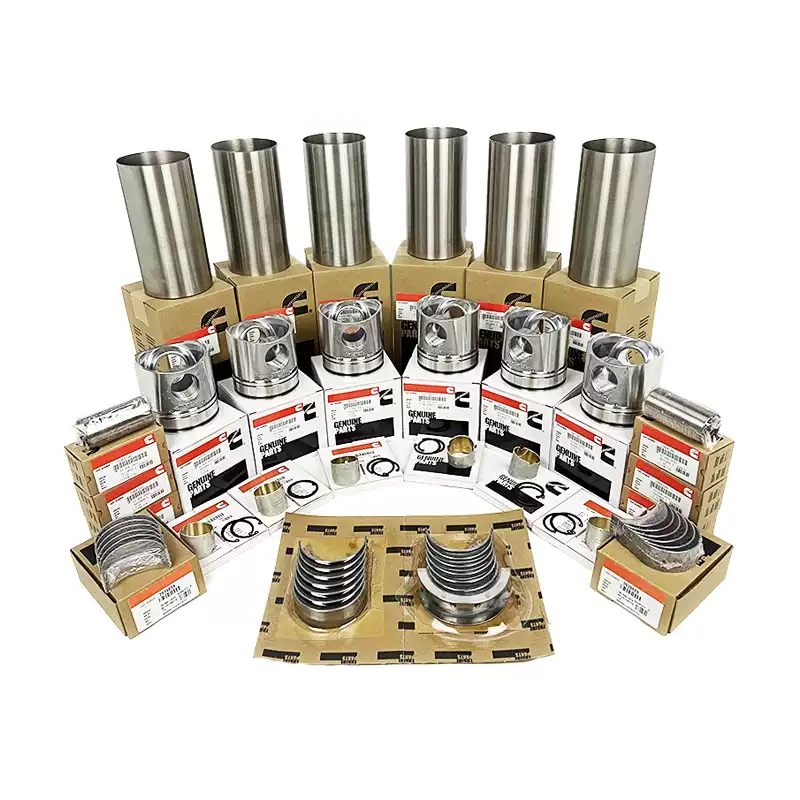
In daily engine assembly and maintenance, some technicians may encounter a situation where the piston pin is difficult or impossible to insert, especially in cold weather. This issue is often reported with aluminum alloy pistons, and it can easily be misunderstood as a product quality problem.
In fact, in most cases, this phenomenon is related to material characteristics and environmental temperature, not a defect in the piston itself.
1. The Role of Aluminum Material Properties
Aluminum alloy pistons are widely used in diesel and gasoline engines due to their:
- Lightweight design
- Excellent heat dissipation
- Good strength-to-weight ratio
However, aluminum also has a relatively high thermal expansion and contraction coefficient.
When temperature drops, aluminum contracts.
This contraction can cause the piston pin bore (gudgeon pin hole) to slightly shrink, making the piston pin feel tight or difficult to insert during installation.
This dimensional change is usually within normal design tolerance, especially for high-precision pistons.
2. Is This a Product Quality Issue?
No — this is generally not a quality problem.
Professional piston manufacturers machine piston pin holes based on engine operating temperature, not cold installation conditions. Once the engine reaches working temperature, the piston expands and the pin clearance returns to its optimal range.
In fact:
- A loose fit in cold conditions may lead to excessive clearance at operating temperature
- Proper tightness helps ensure durability, stability, and reduced wear
3. When Does This Issue Commonly Occur?
This situation is more likely when:
- Installation is done in winter or cold environments
- Pistons are stored in low-temperature warehouses
- High-precision replacement pistons are used
- Installation is attempted without controlled heating
4. Recommended Installation Solutions
To ensure safe and correct piston pin installation, we recommend:
✔ Controlled heating of the piston
- Use hot water, oil bath, or an electric heating plate
- Recommended temperature: 60–80°C
- Avoid open flames to prevent material damage
✔ Keep the piston pin at room temperature
✔ Use proper installation tools
- Piston pin press tools ensure correct alignment
✔ Never force installation
- Hammering may damage the pin bore and piston structure
5. Key Takeaway
Difficulty inserting a piston pin in cold weather is:
- A normal physical behavior of aluminum alloy
- Not a product defect
- Easily solved with proper installation methods
Understanding these principles helps avoid misjudgment, improves assembly efficiency, and ensures long-term engine performance.
Contact Us for Technical Support & Piston Solutions
If you have questions about pistons, piston pins, or engine assembly, or if you are sourcing high-quality replacement engine parts, our team is ready to assist you with professional technical support and reliable products.
📲 WhatsApp: +86 193 7585 5081
✉️ Email: wit.huang1@gmail.com
🌐 Website: https://enginepartsglobal.com/
Feel free to contact us for product inquiries, technical consultation, or bulk orders.